

More Isn't Better. Better Is Better.

Is knowing more techniques better? Does complexity equal advancement? Do I need more kata to become a more advanced Black Belt?
There's a widespread misconception that the more techniques you know, the more skilled you are. People hear "Black Belt techniques" and picture some secret, exotic library reserved for the advanced. It doesn't work that way.
Yes, techniques get more complex as you advance, and yes, having a fuller arsenal is useful. But more techniques and more complex techniques don't make you a better martial artist.
What makes you better is your understanding and your proficiency in executing the techniques you already have.
Take the most basic lock you know — the bent-elbow wrist lock (sometimes called center lock or nikyo). Almost everyone learns this as a white belt. But a Black Belt's nikyo is unrecognizable next to a beginner's: multiple entries, multiple takedowns from it, multiple counters, the micro-adjustments that make it work on a resisting partner, and — most importantly — the timing.
That's the difference. Same technique. Completely different practitioner.
Neil deGrasse Tyson offers a great analogy in Death by Black Hole. He talks about studying the gravity of Jupiter — not just the planet itself, but how its gravity affects everything around it. Real knowledge isn't the study of a thing in isolation. It's the study of how that thing affects everything around it.
Apply that to a single technique. At a base level, you learn the move. As your proficiency expands, you learn how it interacts with everything else — body mechanics, your partner's reactions, openings, counters, timing. Down to the micro-movements.
When we evaluate students for ranking, we're not asking "do you know this technique on paper?" We're asking "can you execute it — especially under stress and in freestyle?" Through repetition, micro-movements and subtle feels emerge that no instructor can teach directly. The student has to feel them through reps.
A useful analogy is shooting a pistol. Anyone who's fired a gun for the first time figures out fast that hitting a target isn't just "pick up the gun, point, fire." There's a feeling — how your grip controls the weapon, how recoil moves through your body, how breath affects aim. Those micro-feelings develop over time, and they're what eventually turn a beginner into someone who can actually shoot.
Martial arts is the same. Proper practice becomes proficiency. Proficiency plus continued practice becomes mastery.
So no — more isn't better. Better is better.
Let's train. OSU!
— Josh Moree
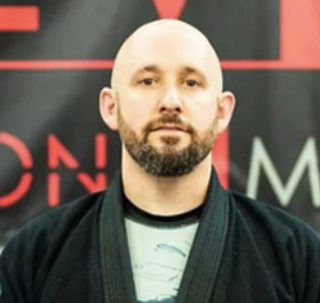
Josh Moree
Shihan Moree is the Founder and Chief Instructor at Evolution X Martial Arts. Practicing martial arts since the 1990s, he builds practical, honest training programs for adults and kids.
Related Articles
The Essential Ingredient for Learning: Struggle
Struggle isn't a side effect of learning martial arts — it's the whole point. Here's what Daniel Coyle's research on mastery teaches us about how real skill is built.